


TRYINGFLY: Your Professional FPV Drone Motor Supplier
Professional Team
The team of TryingFly is made up of passionate and qualified professionals, with a wide range of skills and knowledge in the FPV drone industry. Thanks to our commitment and our experience, we can offer our customers a wide range of high-quality FPV drone products. And we have a research and development center for pilots and provide a place for pilot experience communication.
Wide Products
We produce high-quality FPV products, including FPV racing drone frames, FPV drone propellers, FPV drone brushless motors, TPU parts of racing drone kits, Freestyle drone frames, FPV drone controllers, FPV flight controllers with GPS, FPV racing drone cameras, etc. For us, ensuring the highest quality is a top priority.
One-stop Solutions
Whether you are interested in video photography, entertainment, freestyle flying or pilot education, TryingFly Technology provides a one-stop service for you.
After-sales Service
After buying any components of the FPV racing drone, we will send you the installation video to show you how to install your own drone. If you have any component issues, also please contact us directly. We will supply you with our best services.
-

The K2004 brushless motors are smooth, powerful, thin and light. They are ideal for ultralight
Add to Inquiry -
FPV Racing Drone Quadcopter 2207 1960KV
FPV Racing Drone Quadcopter 2207 1960KV provides the perfect balance of power, torque and
Add to Inquiry -
Brushless Motor Quadcopter 2007.5 1960KV
Enameled wire: temperature resistant 220°. Weight: 18.5g. Installation diameter: 12mm.
Add to Inquiry
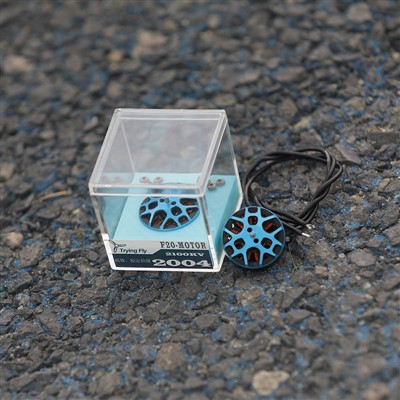


An FPV Drone Motor refers to the skeletal structure that holds all the components of a first-person-view racing drone, including the motors, flight controller, and camera. It provides the necessary support and protection while determining the overall performance and durability of the drone.
Motor Bell for FPV Drone Brushless Motors
The motor bell is the housing of the brushless motor. This is the part that has the writing of the manufacture and other information pertaining to the motor itself.
The motor bell houses the magnets of the motor, where all the action happens.
Magnets of The FPV Drone Brushless Motor
The magnets inside the motor bell are activated by electromagnetism from electricity from the drone battery.
This jolt of power in conjunction with the stator allows the magnets to begin to rotate within the motor bell. This rotation in turns also causes the shaft to turn which spins the propellers and allows flight of the drone.
Stator of Brushless Motor
The stator of the FPV drone brushless motor is where all the electricity flows. This component comprises of the Windings and bearings and receives electricity that causes the magnets to spin.
The stator is responsible for the actual size and shape of the overall motor while the motor bell covers the entire assembly.
The stator has been referred to as a mini hadron collider by its looks. It holds the windings around arms that convert the electricity into electromagnetic energy.
Windings in a Brushless Motor
The windings are the coper wires that are wrapped around the arms of the stator and conducts the electricity from the battery and directs it through the stator to the magnets to cause them to be repelled and spin.
The amount of winding depends on the size of the stator and in turn the size of the overall motor.
Bearings for Brushless Motor
The bearings are at the center of the stator and may be a familiar sight to those who have ever skated before
Bearings of a brushless motor house little balls either made of steel or ceramic that helps reduce friction and allow a smooth spinning motion of the shaft which turns the propellers.
When building a drone from scratch you many want to know and decide on what type of bearings you would require.
Steel bearings are more durable in a crash and can take the stresses of a freestyle quad changing direction quickly but conduct more heat hence finding a balance of performance and durability must be met.
Ceramic bearings may not conduct as much heat and offer a smoother rotation but is not so good at the jerky movements of a freestyle quad and may not stand well to crashes.
Shaft for FPV Drone Brushless Motors
The shaft is the part that stick up from the motor and is where the propeller is attached to the motor. This is the most noticeable part of the motor apart from the overall motor bell.
The shaft as you may now understand is caused to spin when electrical current is sent to the stator, runs through out the windings on the stator and is converted to electromagnetic energy that causes the magnets in the motor bell to turn.
This turning also causes the bearings and shaft to turn hence spinning the motor and the propeller of the drone.
Brushed FPV Drone Motor
The internal operation of a brushed motor is contrary to that of a brushless FPV drone motor. In the brushed motor, the stator provides a permanent magnetic field that surrounds the rotor. The rotor of the brushed motor is an electromagnet which is influenced by the surrounding stator. A pair of brushes attached to DC power contact the commutator ring at the base of the rotor. The commutator ring is divided, therefore its rotation will periodically reverse the direction of the current flowing through the rotor, as its rotation causes the commutator to reverse its polarity. The alternation of the commutator ring polarity translates into uninterrupted revolution of the rotor.
This entire process occurs internally within a motor can, which provides excellent protection for the delicate components. Although, efficiency of the system is reduced due to the greater thermal insulation of the internal mechanics. It is possible to reverse the rotation direction of the motor by inverting the polarity of the DC power input. Due to the contact of the brushes with the commutator, longevity of the brushed motor is greatly reduced in comparison to the brushless motor. In terms of application, a brushed motor is better suited for micro class multicopters, their small size, low weight and simple driving technique improves their suitability for micro FPV flight.


Brushless FPV Drone Motor
As the name implies, a brushless FPV drone motor lack brushes. The brushless motor can be effectively divided into two separate components; the rotor and the stator. The stator is the central unit into which the rotor is mounted. The stator is made up of a network of radial electromagnets that alternatively power on and off to produce a temporary magnetic field when a current is passed through the windings. The rotor holds a collection of permanent magnets which are positioned in close proximity to the semi-permanent stator electromagnets. Attractive and repulsive interaction of the stator and rotor magnets is translated into rotational movement. When assembled, the shaft of the rotor is inserted into a pair of ball bearings located in the stator that maintain linear, smooth revolution of the rotor.
Although the brushless motor is powered by DC current, it can’t be driven directly. Instead, the brushless motor is wired to the control electronics, effectively eliminating the need for brushes or a commutator. Longevity of the brushless motor is excellent as there is no physical contact between the rotor and the stator. The brushless motor is also more efficient than the brushed motor. The brushless motor is extensively used in mini and some micro multicopter applications, where high power outputs and efficiency are prioritized.
Key Advantages of Brushless Drone Motors
Brushless drone motors offer a range of benefits that make them highly desirable for various applications. Let’s explore some of the key advantages.
Longer Lifespan and Reduced Maintenance
One of the primary advantages of brushless motors is their extended lifespan. With no brushes to wear out, these motors can operate reliably for extended periods without the need for frequent maintenance. This longevity translates to cost savings and improved overall durability.
01
Enhanced Efficiency and Performance
Brushless motors operate at higher efficiency levels compared to brushed motors. The absence of rotor-generated magnetic fields allows brushless motors to achieve optimal performance and energy conversion. This efficiency improvement results in reduced power consumption, longer battery life, and improved overall system performance.
02
Quieter Operation and Reduced Electromagnetic Interference
The elimination of brushes in brushless motors significantly reduces noise during operation. The absence of physical contact between the brushes and the commutator eliminates the primary source of electromagnetic interference found in brushed motors. This reduction in noise and electromagnetic interference makes brushless motors ideal for applications requiring quiet and interference-free operation.
03
Precise Control and Variable Speeds
Brushless motors offer precise control over speed and torque, allowing for smoother operation and better performance. The electronic commutation system enables accurate adjustments, resulting in reduced inertia and energy consumption. This level of control is especially crucial in applications where precise movements or varying speeds are required.
04
Compact Size and High Power-to-Weight Ratio
Brushless motors are known for their compact design and high power-to-weight ratio. The absence of brushes and the use of permanent magnets on the rotor contribute to a more efficient use of space. These motors are particularly suitable for applications where size and weight are critical factors, such as drones, electric vehicles, and robotics.
05
No matter your drone’s overall size and its motor size, there are factors that come into play. These factors are important to consider even if you are comparing brushed vs brushless motor drones. Here are some important considerations regarding motor size.
Thrust to Weight Ratio
No matter the drone, the motor should provide twice as much thrust as the total weight of the unit. This is an important metric to take note of, as a limited thrust within a drone motor leads to issues during takeoff and serious control and landing issues. In other words, if the motor is not up to snuff here, you could be looking at an instant accident and some repair costs to fix your drone after it falls from the sky.
Battery Life and Voltage
You are going to want to make sure your drone’s motor is powerful enough for your needs, but not so powerful that it drains the battery at a quicker-than-average clip. As a rule of thumb, you want your battery to provide for at least 20 to 30 minutes of flight time before needing a recharge. Anything less than that, and your drone’s motor may simply be too high of a voltage draw for your battery. Replace with a less powerful motor or a more powerful battery. Also, keep track of the weight.
Accessories
Cameras and other accessories can drag down a motor’s efficiency, so keep that in mind before you attach anything to the drone that was not originally accounted for when weighing the drone. Always remember that weight-to-thrust ratio.
Size of FPV Drone Motor for Different Drone
|
Prop Size |
Motor Size |
Motor Kv |
Batt Cells |
|
2″ |
1103, 1105, 1106 |
6000 – 11000 |
2s |
|
1104, 1105, 1106 |
5500 – 7500 |
3s |
|
|
1105, 1106 |
5000 – 6000 |
4s |
|
|
2.5″ |
1104 |
5000 – 6000 |
2s |
|
1106 |
4500 |
3s |
|
|
3″ |
1404 |
4500 – 5000 |
2s |
|
1407, 1408, 1507 |
3500 – 4200 |
3s |
|
|
1306, 1407, 1408, 1507, 1606 |
3000 – 4200 |
4s |
|
|
4″ |
1407, 1507, 1606 |
3000 – 4000 |
4s |
|
1606 |
2000 – 3000 |
6s |
|
|
5″ |
2306, 2207, |
2300 – 2700 |
4s |
|
2207, 2208 |
1700 – 1950 |
6s |
|
|
6 “ |
2207, 2208, 2405, 2407, 2408 |
2100 – 2500 |
4s |
|
2207, 2208, 2405, 2407, 2408 |
1500 – 1800 |
6s |
|
|
7″ |
2501, 2806, 2808 |
980 – 1450 |
6s |
Tips:
1)The first two numbers of the motor size/stator size represent the diameter of the motor in millimeters.
2)The third and fourth numbers represent the height of the overall motor.
How to Connect Propellors With The Motor?
The first thing that you need to understand here is that the propellors that you are getting must be of the same size and assortment as the fitting area of the motor’s shaft.
Now that you have procured the said propellers all you have to do is to match the color of the marker on the propeller to the post color on the motor. This might be different for different drones that you are willing to assemble which is why it is recommended to read the fitting manual to get the propeller’s setting right.
The next step involves placing the matching propellers over the matching motor.
Now hold the motor in your hand and push on the center of the propeller, while doing so you would have to turn the propeller in the appropriate direction as indicated on its blade. For black, it is usually counterclockwise while for the grey ones it is clockwise.
When it stops moving any further and is snugged at its place there is no need to apply more torque or turn it further. Nevertheless, ensure that the propeller itself and the motor are turning together when you give it a good jolt.
If you wish to remove the propellers the process is ideally the same but everything is in reverse. To do so, apply force inwards over the head of the propeller that is fastened inside the motor and turn it into the preferred direction for unwinding as indicated on the blade. Soon enough the propeller will loosen up and you will be able to remove it from the motor.
How to Choose FPV Drone Motor?
The KV rating of a motor refers to its RPM (revolutions per minute) per volt. A higher KV rating means the motor will spin faster, but also draw more current. Lower KV motors will be more efficient, but will spin more slowly. When choosing a motor, consider the type of flying you’ll be doing. For racing, you’ll likely want a high KV motor for maximum speed, while for freestyle flying or aerial photography, a lower KV motor will provide longer flight times and smoother operation.
The stator is the stationary part of the motor that surrounds the rotating magnets. Larger stator sizes generally provide more torque and are better suited for heavier payloads or high-speed racing. Smaller stator sizes are more efficient and provide longer flight times, making them a good choice for freestyle flying or aerial photography.
The number of magnets in a motor affects its torque and efficiency. Generally, motors with fewer magnets provide higher torque but lower efficiency, while motors with more magnets provide higher efficiency but lower torque. Again, consider the type of flying you’ll be doing when selecting a motor. For racing, you’ll want a motor with fewer magnets for maximum power, while for freestyle flying or aerial photography, a motor with more magnets will provide longer flight times and smoother operation.
The weight of the motor is an important consideration, as it affects the overall weight of the drone. Heavier motors will require more power to lift, which can reduce flight times and performance. Lighter motors will provide longer flight times and better maneuverability, but may not be as powerful as heavier motors. Consider the weight of your frame and other components when selecting a motor, and aim for a balance between power and weight.
FPV drones can take a beating, so durability is an important factor to consider when selecting a motor. Look for motors with high-quality bearings and well-designed cooling systems, as these can help to extend the life of the motor. Motors with removable or replaceable parts are also a good choice, as they allow for easy repairs and upgrades.
Our Team


Frequently Asked Questions About FPV Drone Motor
Q: What are brushless motors for drones?
Q: What motors do FPV drones use?
Q: What makes a FPV drone faster?
Q: What motors are used in quadcopter?
Q: What is N and P in the motor?
Q: What are KV ratings?
Q: What the common size of FPV motors?
Q: What is the lifespan of an FPV drone motor?
Q: How many amps does a drone motor need?
Q: What is motor rate and why does it matter?
Q: What factors affect motor rate?
Q: Why use a brushless motor?
Q: What is a long-range FPV drone?
Q: What’s a freestyle FPV drone?
Q: What’s a racing FPV drone?
Q: How to clean FPV drone motors?
Q: How to maintain FPV drone motors?
As one of the most professional fpv drone motor manufacturers and suppliers in China, we're featured by quality products and good service. Please rest assured to wholesale cheap fpv drone motor from our factory. Contact us for more details.
Brushless Motor Quadcopter 2007 5 1960KV